
Reviews
This matching puzzle stands out for its gentle approach to early learning. The absence of timers and scores creates a relaxed environment where children can focus on identifying seasonal items without stress. The cheerful graphics clearly represent spring, summer, fall, and winter, making it easy for young minds to connect images with concepts. Parents will appreciate the safe, ad-free design, while teachers can use it as a quiet classroom activity. It is a solid choice for building observation skills and seasonal vocabulary in a pressure-free way.
About this game
Identifying Seasonal Clues
Each round presents a colorful image that represents one of the four seasons. A blooming flower points to spring, while a golden leaf signals autumn. Children decide which season the item belongs to, building recognition of natural cycles. The visuals are bright and clear, making it easy for young eyes to distinguish between summer suns and winter snowflakes. This simple classification task strengthens observation skills without pressure.
Self-Paced Play Structure
There are no timers or point systems, so children can take as long as they need to think about each match. After completing one set of items, the game automatically moves to the next group. This flow keeps the experience smooth and uninterrupted. The large play button on the main screen is easy for small fingers to tap. The entire design focuses on comfort and exploration rather than competition.
Visual Design and Tone
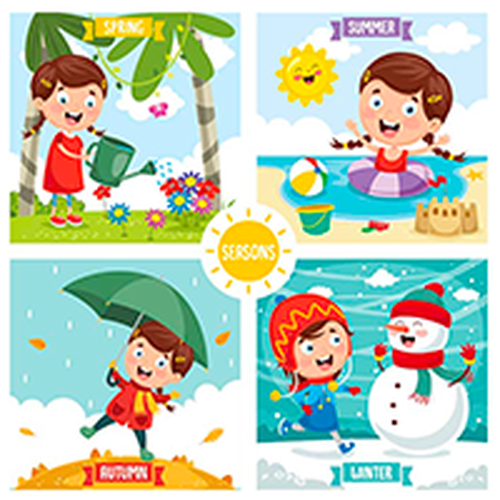
The graphics use cheerful colors and friendly illustrations that represent each season clearly. Spring shows green grass and blossoms, summer features bright sunshine, autumn displays orange leaves, and winter includes soft snow. The art style is warm and inviting, creating a calm atmosphere for quiet play. There are no loud sounds or distracting animations, which helps maintain focus on the learning task.
Building Vocabulary and Curiosity
As children match items, they naturally learn the names of seasonal objects and weather patterns. Parents or teachers can encourage conversation about why a snowflake belongs to winter or why flowers bloom in spring. This verbal interaction extends the learning beyond the screen. The game serves as a starting point for discussions about nature and the changing year. Repeated play reinforces these concepts in a stress-free way.
Classroom and Home Use
The lack of timers and scores makes this game suitable for both home and classroom settings. Teachers can use it as a group activity, letting children take turns matching items. Parents appreciate that it provides quality screen time without addictive mechanics. The simple controls mean even toddlers can participate with minimal guidance. The game respects each child's individual learning pace, making it a versatile educational tool.










Comments
Sign in to leave a review
No account? Create one
No comments yet.